Setting a Pokies Session Budget for Real-Money Play in Australia
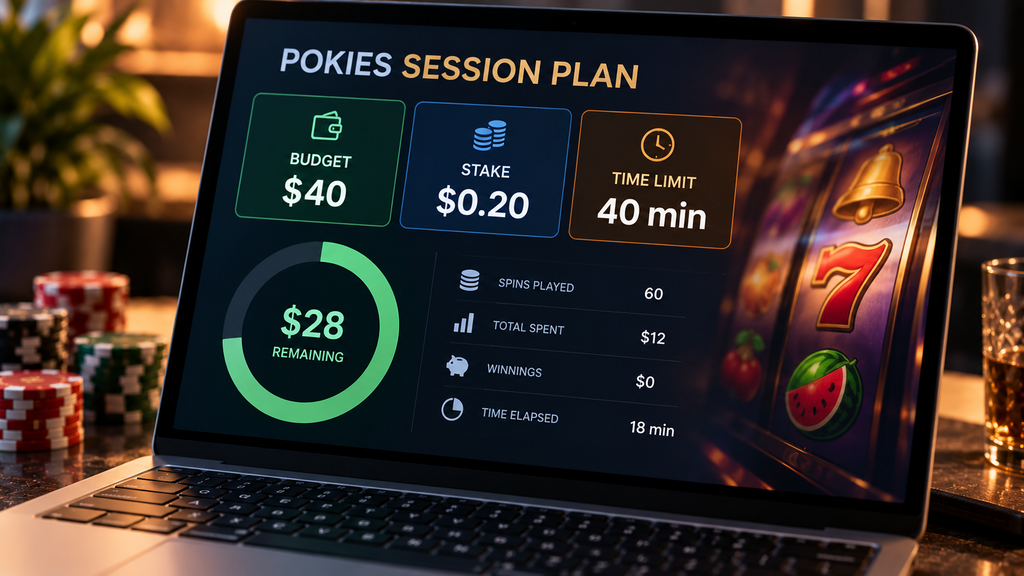
A session budget is the amount set aside for one period of play. It creates a clear boundary before results begin influencing decisions, and the bankroll planning for a Leon Casino session approach shows how separating a single visit from a broader monthly entertainment allowance keeps the numbers manageable.
A budget controls the amount exposed during the session. Game volatility, stake size, speed and random outcomes will still determine how long the balance lasts.
Begin with disposable entertainment money
Pokies spending should come after rent, food, bills, savings and other commitments. A player might set a monthly entertainment amount and divide it across several activities. If $160 is available for casino play and four sessions are planned, a simple starting figure is $40 per session. Unused money can remain outside the casino account.
This division keeps one long session from quietly using funds intended for the rest of the month.
Set a loss limit before depositing
The loss limit is the maximum amount the player accepts may be gone when the session ends. It can match the deposit, or sit at a lower figure. Someone may deposit $100 for convenience and decide that the session stops if the balance falls by $40.
A visible starting balance makes the boundary easier to track. If the account already contains funds, noting the opening figure keeps old money, new deposits and winnings clearly separate.
The limit stays fixed once the session begins. Spins are independent outcomes, and each result stands on its own.
Choose a stake that leaves enough base bets
Dividing the session budget by the stake shows how many base bets are available before any returns:
| Session budget | Stake per spin | Base bets available |
| $40 | $0.20 | 200 |
| $40 | $0.50 | 80 |
| $40 | $1.00 | 40 |
| $40 | $2.00 | 20 |
Wins will change the actual number of rounds, but this simple measure shows if the stake is large relative to the budget. Twenty base bets offer little room for ordinary variation, especially on a volatile pokie.
A fixed stake also makes the balance easier to follow. Raising it after a win can shorten the remaining session quickly.
Add a time boundary
A spending limit controls money, while a time limit controls exposure to repeated decisions. Both are useful because a low stake can still produce a very long session.
A player could choose forty minutes and set an alarm before starting. When the alarm sounds, the session ends or pauses for a review.
Spin speed matters. Quick-spin settings can produce much more turnover per hour than normal animations. Slowing the pace gives more time to notice balance movement, with the same underlying game maths.

Decide how wins will be handled
A budget plan can include a profit point as well as a loss limit. For example, a player starting with $50 may decide to withdraw any balance above $100 or stop if the account reaches $80.
The chosen figure is personal. The benefit comes from deciding before the outcome appears. A large win decided in advance can be partially secured rather than returned entirely to play.
Partial withdrawals may be delayed by verification or minimum cashout rules. A player can still stop playing and leave the funds untouched while the request is prepared.
Keep bonuses separate from the core budget
A deposit bonus can increase the displayed balance but also adds wagering requirements, game restrictions and expiry. Promotional funds carry their own conditions.
Before accepting an offer, the player can calculate the turnover target and check the maximum stake. If the terms would require more play than the original budget allows, declining the promotion keeps the session simpler.
Bonus cancellation may remove related winnings. The cashier should show the amount that remains before confirmation.
Review decisions after the session
A short record helps identify what to adjust next time:
- Starting balance;
- Finishing balance;
- Total time spent;
- Usual stake;
- If the planned limits were followed.
The review focuses on decisions. If the planned $40 regularly feels too high, the next session can be reduced. If a 50-cent stake makes the balance move faster than expected, the future stake can be lowered. These changes are made between sessions, when there is no pressure from an active game.
A session budget works because it is specific: a fixed amount, a chosen stake and a stopping time. Australian players who prepare those figures before real-money play can enjoy the activity within an entertainment plan where a single result stays within its proper place.