
What Casino Licences Mean for Australian Players
A casino licence is a regulatory permission that connects an operator to a set of rules, oversight and accountability. Most platforms, Queenspins included, display a licence badge in the footer. That badge gives a starting point for checks. Australia organises gambling regulation across federal and state levels, with different frameworks covering online wagering, physical casinos and other gambling products. Reading the licence name, company details, authorised activities and complaint route together gives a player a clearer picture of how the service operates. A polished footer is easy. The register entry behind it does the useful work.
A Licence Connects an Operator to a Regulator
A gambling licence identifies the legal entity authorised to provide specified activities under a regulator’s rules. The licence may cover a physical casino, wagering service, lottery product, gaming machines or another defined category. Scope matters.
The regulator sets conditions covering ownership, financial resources, game controls, responsible gambling, record keeping, staff suitability and customer complaints. Conditions differ across jurisdictions and gambling products. A sports wagering licence covers wagering activities; a casino licence covers casino operations.
Players should expect a licence reference to lead to a named company and an official register entry. The trading name on a website may differ from the corporate licence holder, so company details help connect the two.
A Badge Works Best With a Number Behind It
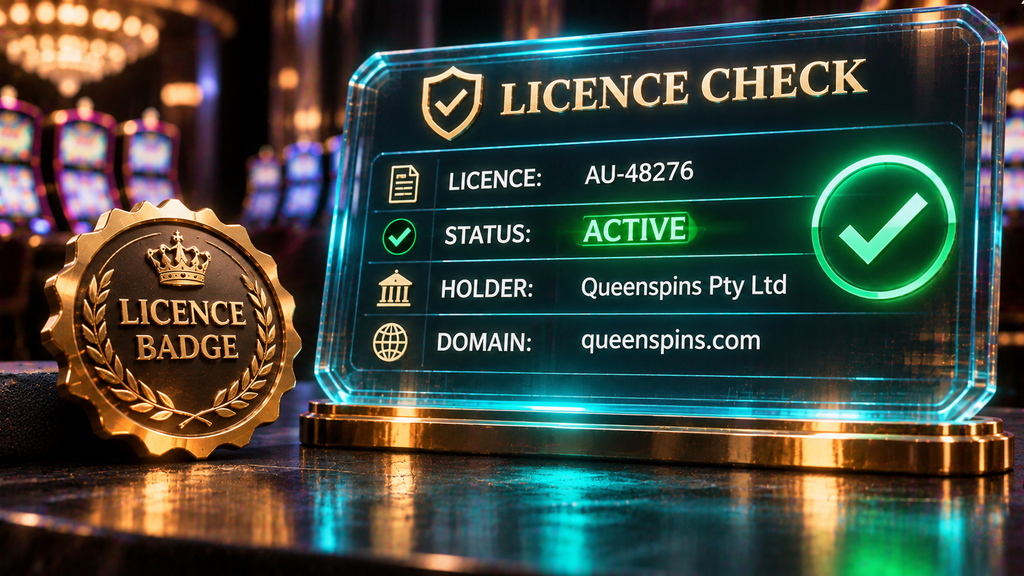
A licence logo is most useful when it comes with a licence number, company name and issuing authority. Those details make it possible to check the regulator’s register directly and confirm that the entry is current, correctly named and covers the right activity.
A footer with full details takes seconds to verify. Useful items include the company name, licence number, issuing authority and registered address. Four details. One quick search. Nobody opened a casino page hoping for detective work.
Australian Gambling Regulation Has Several Layers
Australia organises gambling regulation across federal and state levels. The Interactive Gambling Act 2001 sets the framework for services delivered online, through apps or by telephone to people in Australia. ACMA, the Australian Communications and Media Authority, administers those federal rules.
Licensed interactive wagering services operate under an Australian state or territory licence and appear on the ACMA register. Physical casinos are licensed under state or territory law by the relevant state regulator.
The two frameworks cover different services and different activities. A player checking a wagering service uses the ACMA register. A player researching a physical casino looks to the relevant state regulator.
How different licence types read for Australian players:
| Licence or status | What it can indicate | What an Australian player checks |
| Australian wagering licence | Permission for covered wagering activities | ACMA register entry and authorised products |
| State casino licence | Permission for a named physical casino | Venue, licence holder and state conditions |
| Overseas casino licence | Oversight in another jurisdiction | Regulator name, scope and complaint route |
| Licence application | A request under assessment | Current status on the register |
| Suspended licence | Regulatory permission has been paused | Effective date and regulator notice |
| Expired licence | The stated approval period has ended | Renewal status on the official register |
The ACMA Register Covers Licensed Interactive Wagering
ACMA publishes a register of licensed interactive wagering service providers. It lists trading names, licence holders, website addresses and licensing authorities for services authorised to operate in Australia within the wagering category.
A player checking an online betting service can compare the website address and trading name against this register. The exact website address matters because operators can run several brands or domains under one corporate group. Four details on the register beat one familiar logo.
Register Checks Are Quick and Direct
Avoid relying solely on a company name found in search results. The regulator’s register provides the cleaner match between trading name, licence holder, URL and authority. A close spelling match between a site and a register entry deserves a careful second look.
The register serves its stated purpose well. Using it for that purpose gives a player a reliable reference point for licensed wagering services.
State and Territory Regulators Oversee Local Licences
Physical casinos and many other gambling products are licensed under state or territory law. The responsible regulator depends on the venue and jurisdiction. Licence conditions can cover casino operations, surveillance, game approval, staff, internal controls and harm-minimisation measures.
Players researching a physical casino can visit the relevant regulator’s register or licence page. Formal decisions and licence changes may also appear in regulator notices. Those records offer useful context.
Overseas Licences Add a Layer of Oversight
An overseas licence indicates that an operator is registered and supervised under another jurisdiction’s gambling framework. The regulator may require technical testing, identity procedures, financial reporting, responsible gambling tools or complaint handling.
Those requirements create a layer of accountability. They identify a regulator, establish operating standards and provide a route for disputes. The practical value depends on the authority’s powers, transparency and accessibility to players.
Complaint Routes Vary by Regulator
Some overseas regulators accept direct player complaints after the operator’s internal process has finished. Others work through an approved alternative resolution body. Checking the complaint procedure before depositing gives a player a clear picture of the available route.
The key questions are practical: who accepts the complaint, which documents are required, what time limits apply and how decisions are handled. The answers are usually on the regulator’s website.
Licence Checks Follow a Simple Routine
A careful review takes only a few minutes:
- Find the licence statement in the website footer or terms.
- Record the regulator, licence number and company name.
- Open the regulator’s official register independently.
- Match the licence holder, trading name and exact domain.
- Check the licence status and authorised activities.
- Read the regulator’s complaint procedure.
- Keep a copy of the terms applying on the deposit date.
The routine separates verified information from presentation. It also confirms that licence details match the service being viewed.
Licensing Shapes Identity and Payment Procedures
Licensed gambling businesses commonly follow procedures covering customer identification, transaction records and financial controls. For a player, this may mean requests for identity documents, address evidence or payment ownership records at certain points in the account lifecycle.
Verification uses the operator’s secure account channel. Passwords, banking security codes and full card credentials remain private. A legitimate review needs evidence to confirm identity and account ownership.
What a Licence Covers and What Sits Outside It
Regulation creates standards, audits, reporting duties and enforcement powers, along with a route for complaints. The licence tells the player which rules apply and who oversees compliance when questions arise. Strong oversight supports accountability across the service.
Players should still read withdrawal terms, bonus conditions, verification rules and complaint procedures alongside the licence details. Licensing is the foundation. The specific terms show how the service operates in practice.
Clear Licence Details Make a Service Easier to Assess
A useful licence statement names the company, regulator, number and authorised activity. The official register confirms those details. For Australian wagering services, the ACMA register provides a direct check. For physical casinos, the relevant state or territory regulator carries the licence record.
Overseas licences describe how an operator is supervised in another jurisdiction, while Australian frameworks cover services offered to people here. Reading both together gives a player a complete picture of the regulatory structure behind a service.
That picture is worth having. A licence is meaningful when its issuer, scope, status and complaint route are clear. With those details in hand, the badge in the footer becomes a starting point for verification, not just decoration.